In the Emperor’s Shadows: Exploring History, Flavors, and Hidden Passages within Diocletian’s Palace
Posted by Darla Hoffmann | Dec 10, 2025 | About Wine & Travel, Croatia, Editor’s Picks, Featured |

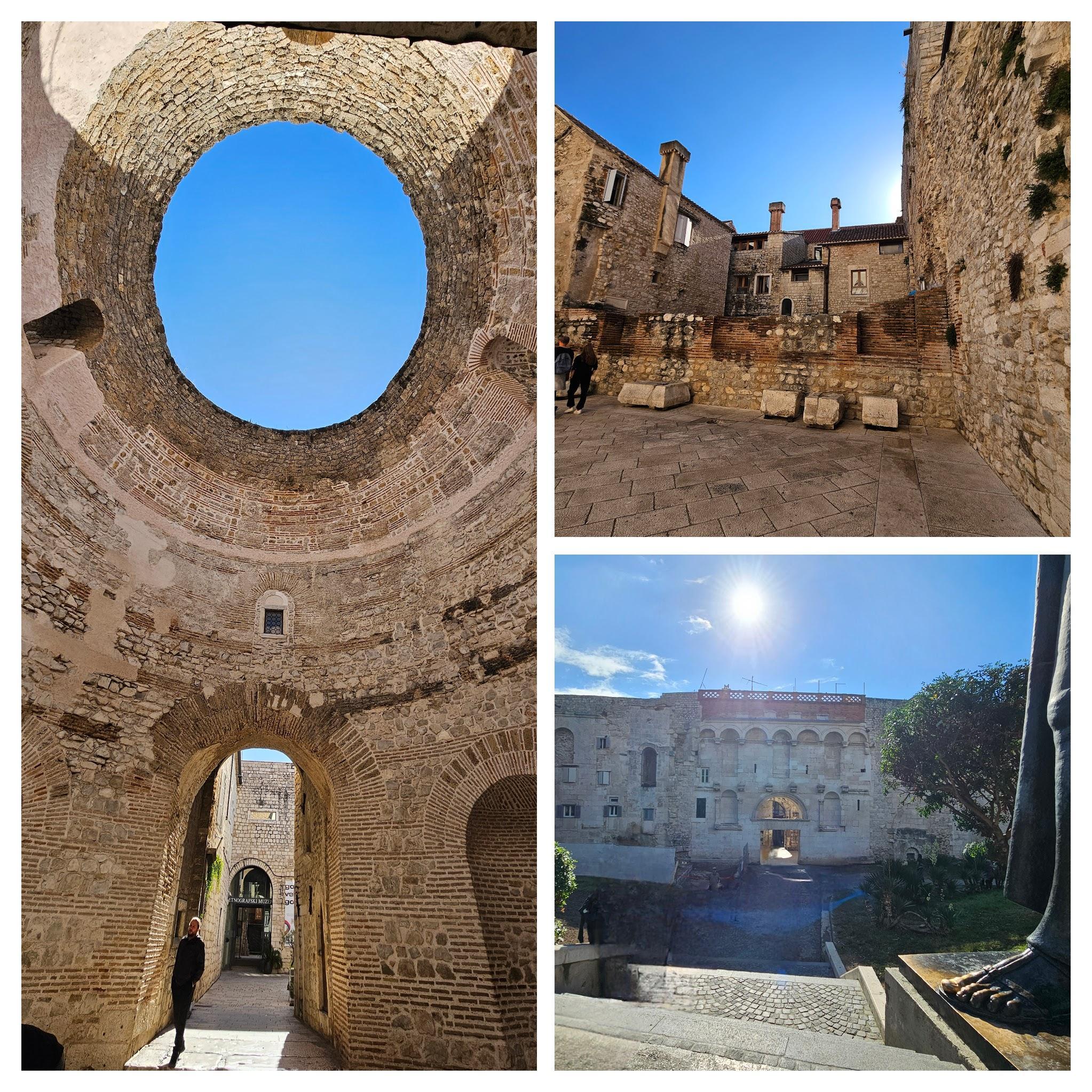
I dropped my bags at Hotel Fermai in Split, Croatia, eager to step straight into history. Diocletian’s Palace, a UNESCO World Heritage Site, built at the end of the 3rd century AD as the retirement home for the Roman emperor, loomed in my imagination as a grand ruin—but what I found was something far more alive. Part fortress, part city, it was a stone village still pulsing with life, where narrow streets now host restaurants, shops, museums, and apartments for locals.
I meandered about, turning corners without a plan, and quickly lost myself in the glorious maze. Emperor Diocletian, known for his harsh personality yet brilliant reforms, had left behind more than walls; he had left a living entity.
The grounds and inside the palace
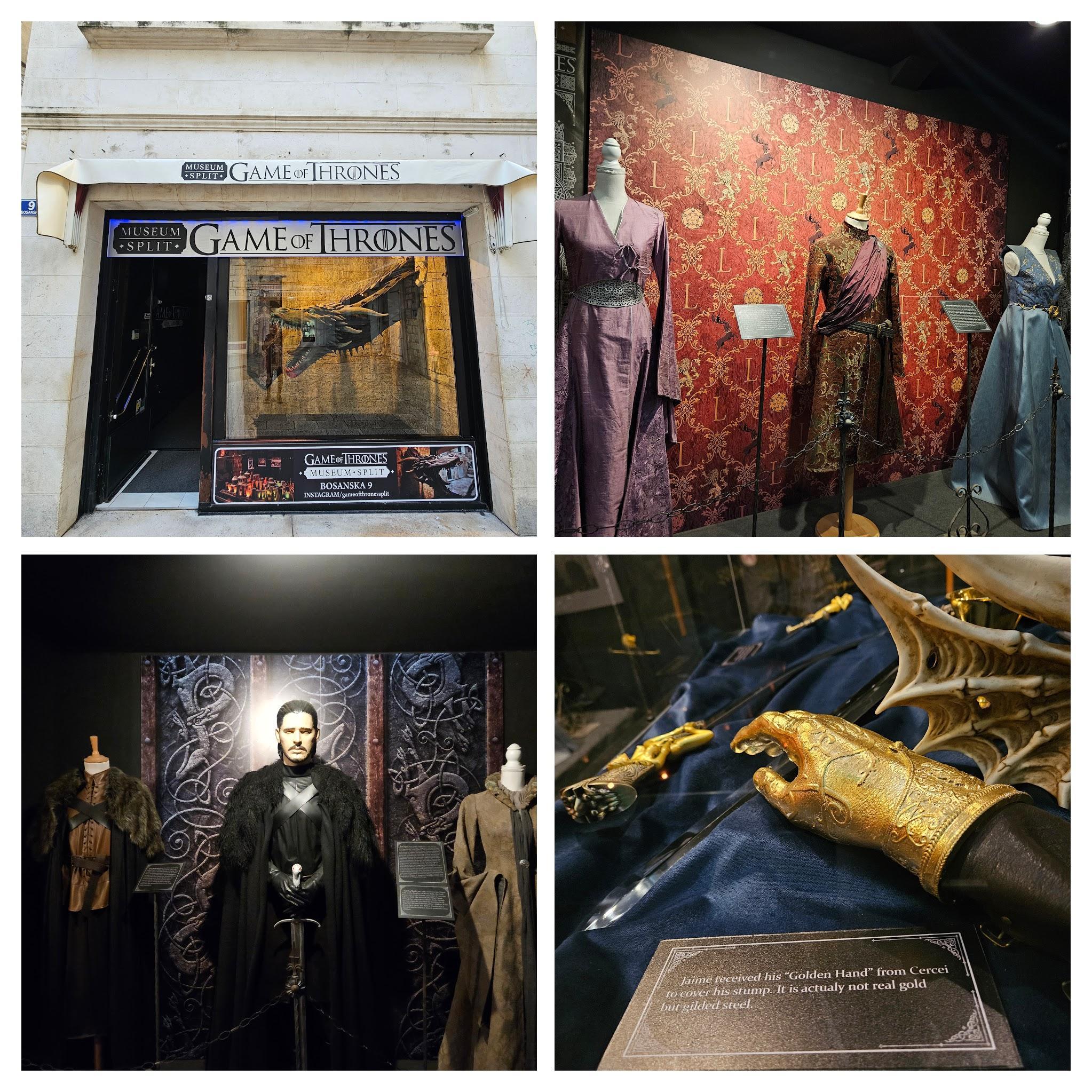
As a Game of Thrones fan, I ducked into the museum, imagining dragons’ shadows flitting across the dimly lit basements where scenes had been filmed.
Game of Thrones Museum ©Darla Hoffmann
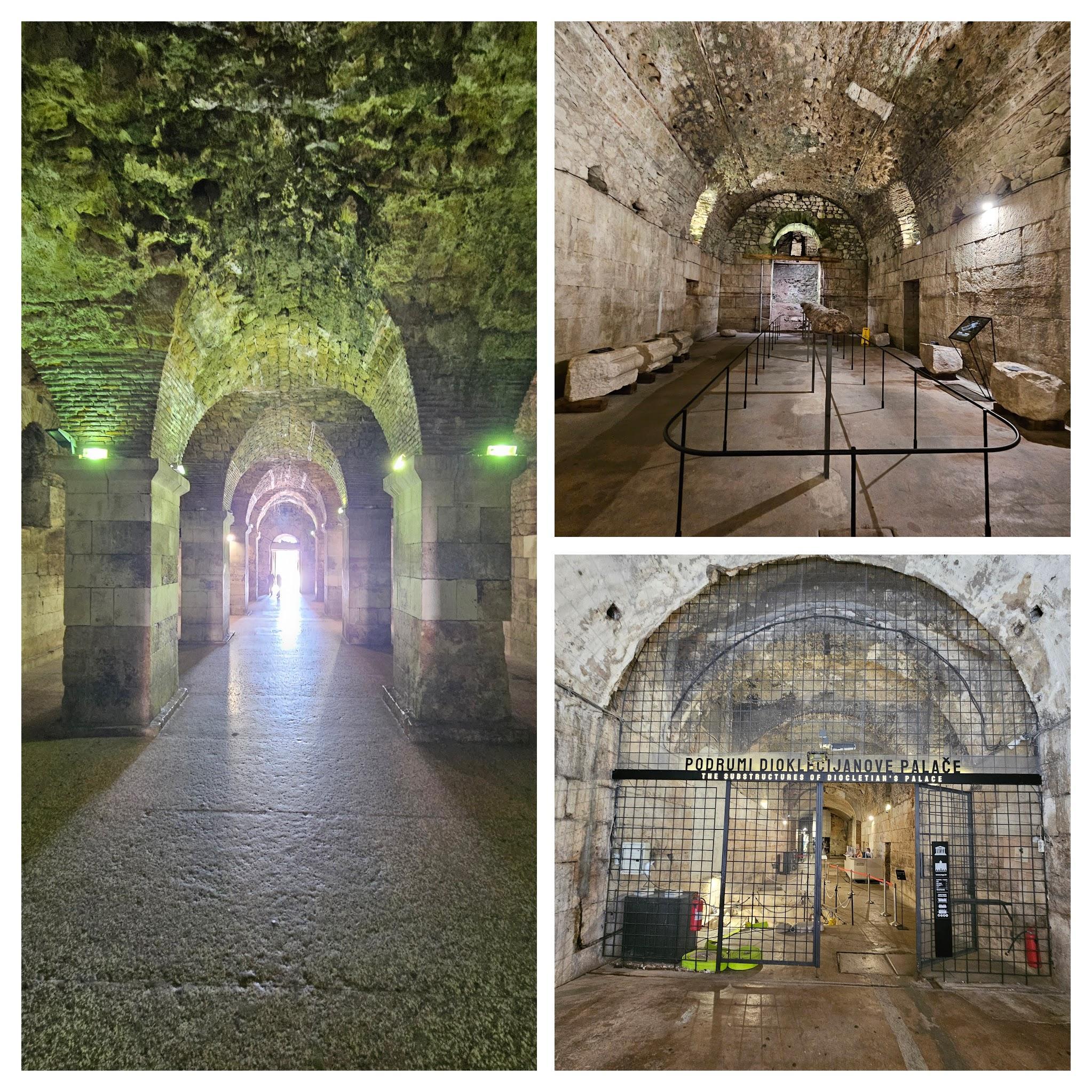
And touring the substructures museum beneath the palace, which mirrored the quarters above, felt like stepping into a Roman-era movie set—I was in awe at every twist and turn.
The substructures and basement of the palace ©Darla Hoffmann
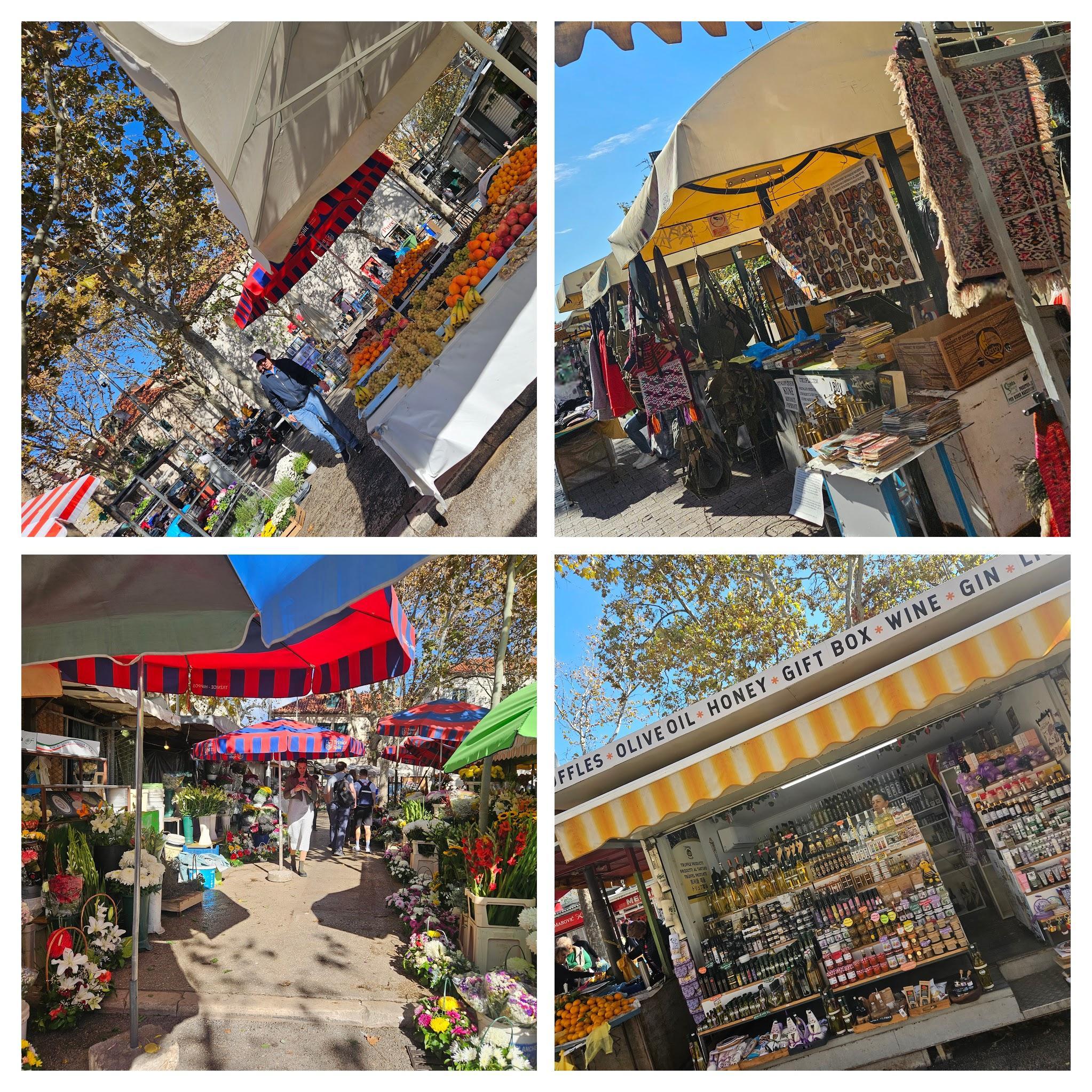
The farmers’ market just outside Diocletian’s Palace bursts with the colors, scents, and sounds of everyday Dalmatian life. Stalls overflow with fresh meats and local produce, fragrant bouquets of seasonal flowers, and booths offering traditional clothing items that reflect the region’s heritage.
The Farmers Market at the palace ©Darla Hoffmann
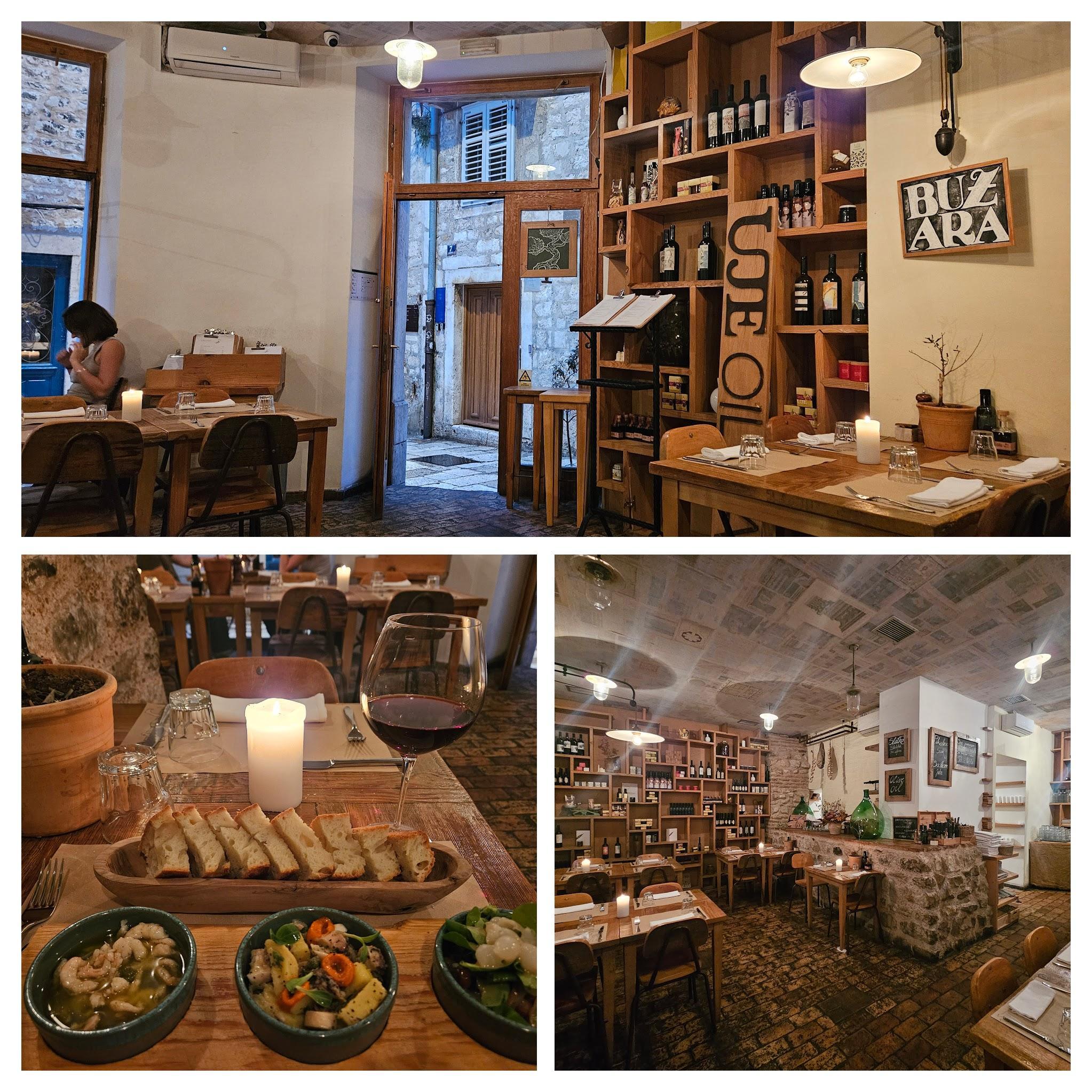
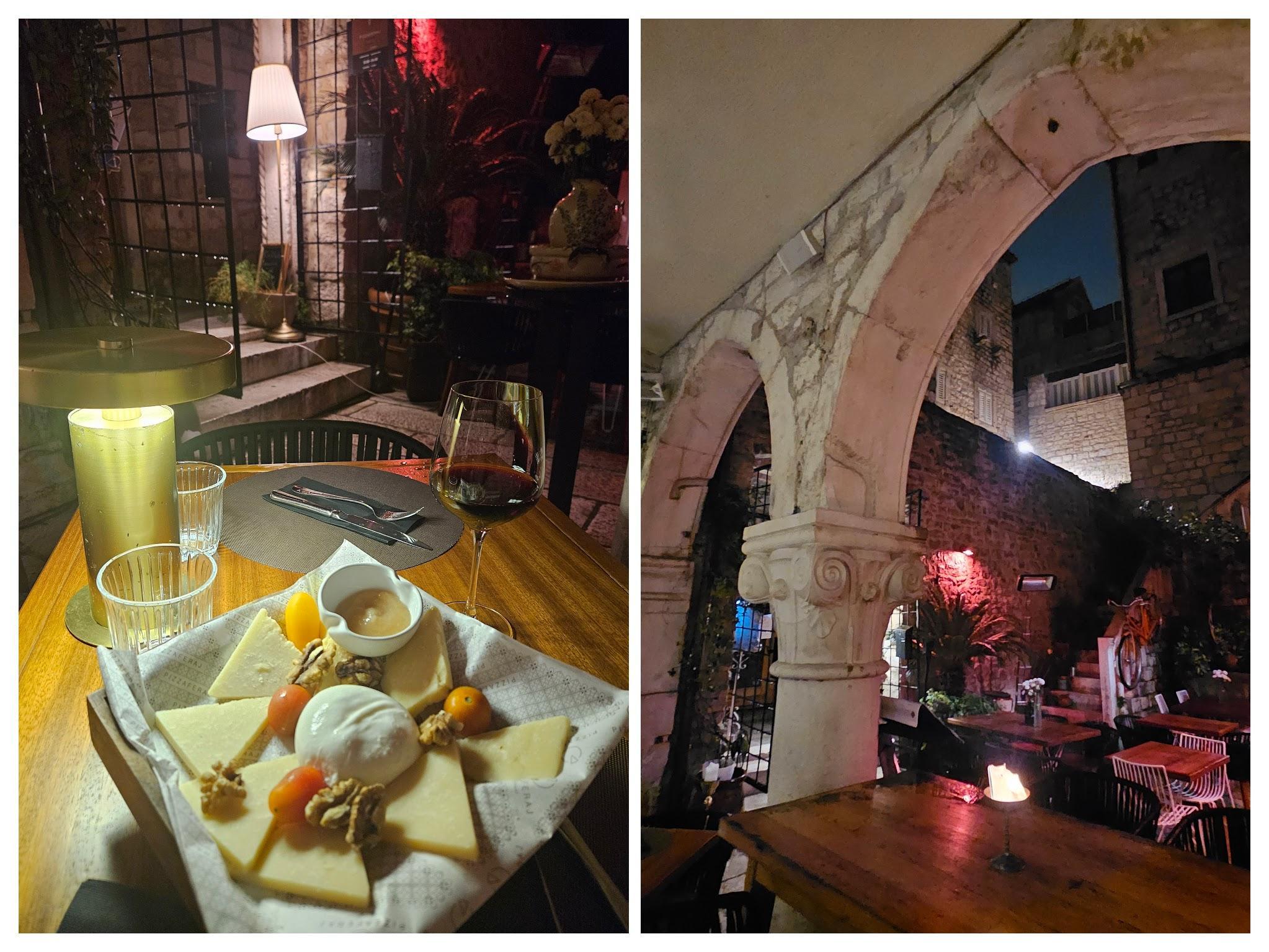
Being alone that first day allowed me to indulge in one of Split’s greatest pleasures: food. I popped in and out of the palace’s eateries, savoring a seafood trio at Uje Oil Bar, then sprinted through the rain to Pizzaferaj city. Sitting in the covered patio, rain drumming along the cobblestone streets, I nibbled bread and cheese with a glass of Plavac Mali, letting the storm add drama and solace to the moment. Prepared with rain gear, I felt completely at ease in this age-old place wide awake with tradition.
Uje Oil Bar ©Darla Hoffmann
Pizzaferaj ©Darla Hoffmann
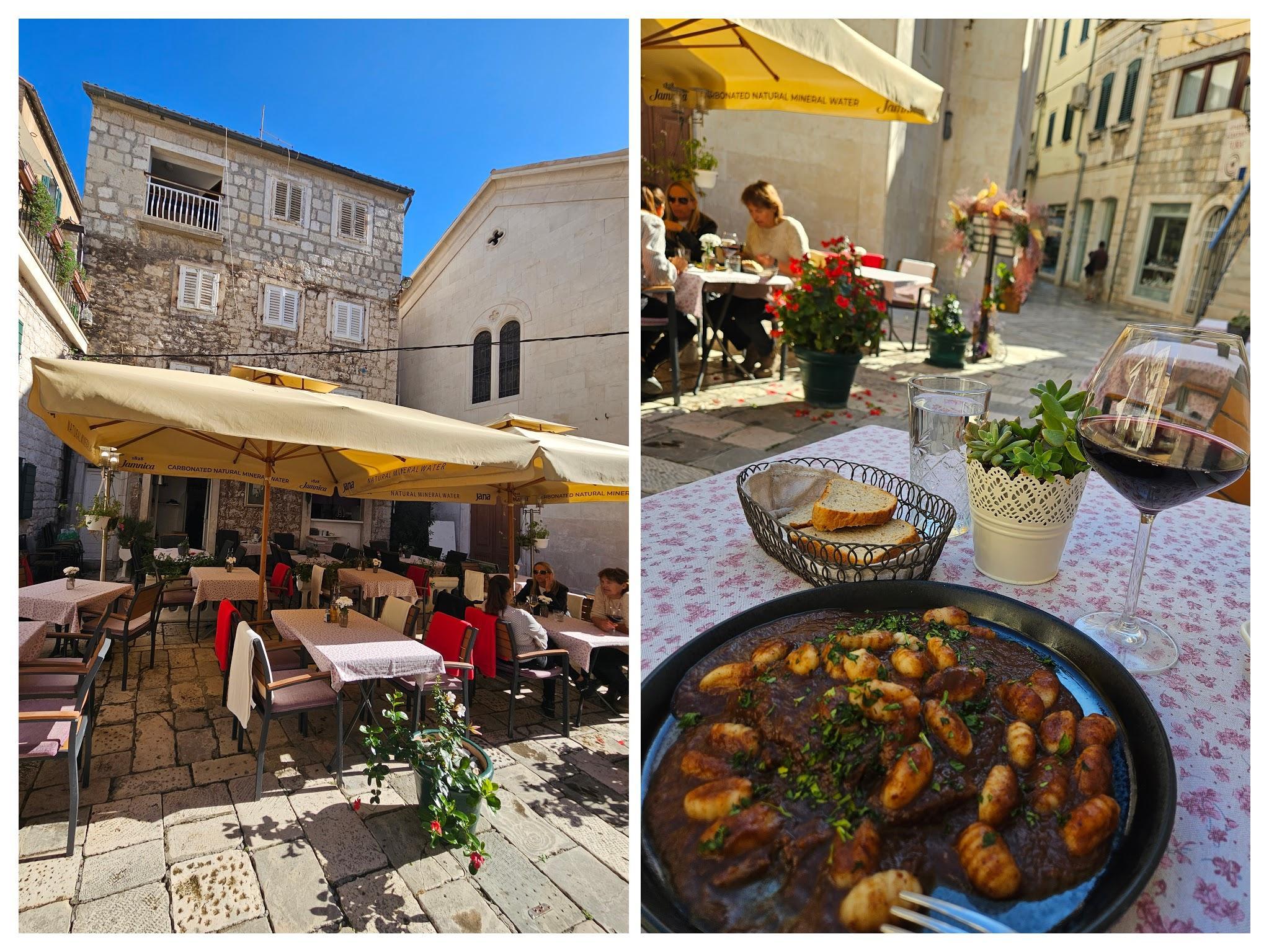
The next day offered more culinary delights before joining my colleagues. La Mia Storia served melt-in-your-mouth beef with gnocchi, and later at Bokeria, a codfish spring roll paired with a light-bodied red of the Posip grape from Nerica Winery had me cherishing every bite while watching the world bustle within the magnificent complex. Each meal felt like tasting the legacies of days gone by.
Lunch at La Mia Storia ©Darla Hoffmann
Appetizer at Bokeria ©Darla Hoffmann
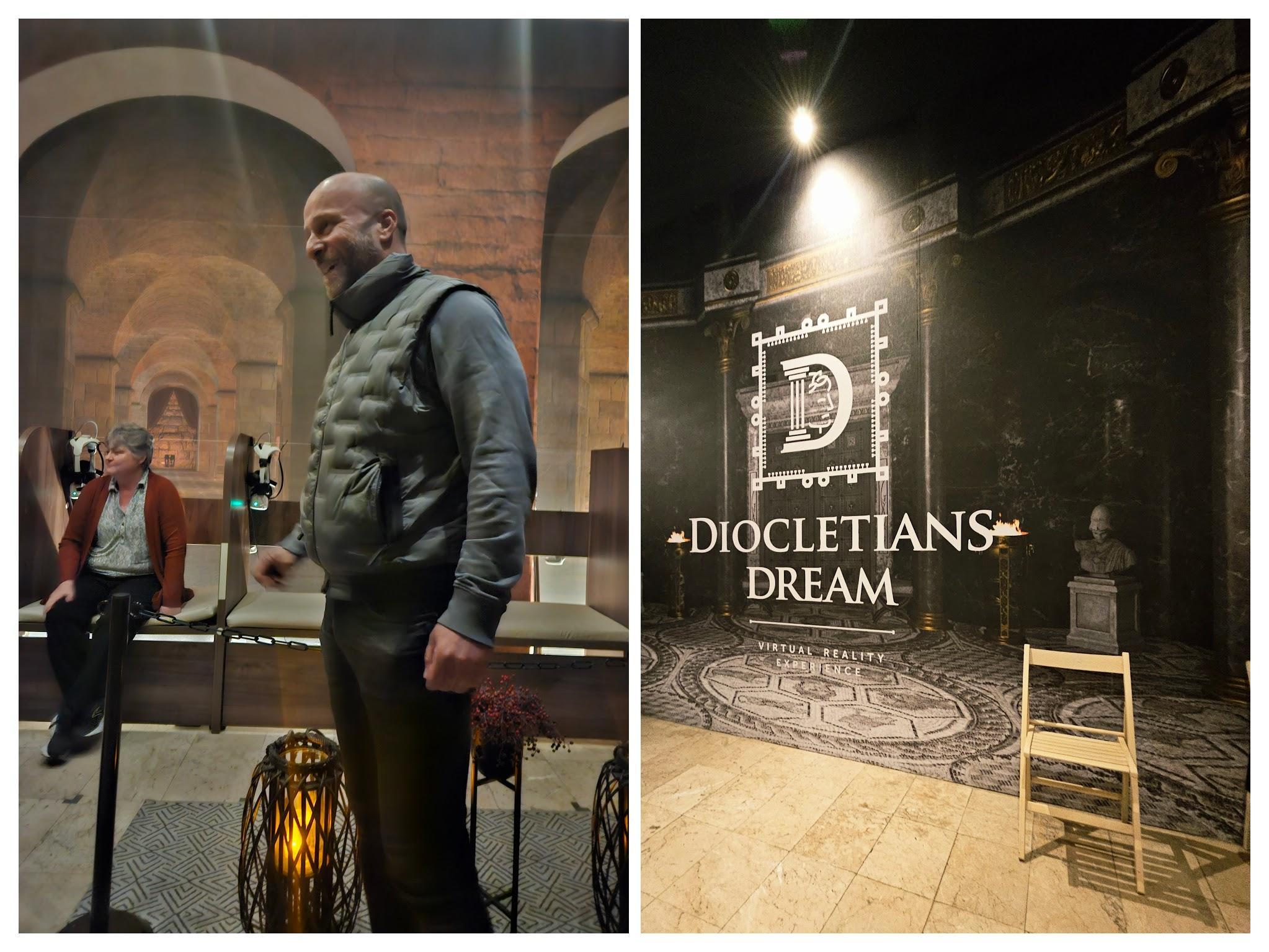
Later that evening, I joined my group at the Diocletian’s Dream Virtual Reality Experience, and we were instantly swept off our feet. The VR transported us to the palace as it once stood: we hovered above towering walls and bustling courtyards, watching ceremonies and celebrations unfold, and then gently dipped beneath the waves of the ancient shoreline, feeling suspended between city and sea.
Diocletian’s Dream VR ©Darla Hoffmann
Walking the palace beforehand, then experiencing it virtually, made the centuries of evolution tangibly layered—I could almost feel Diocletian’s presence among us. Dinner that evening at Makarun continued the indulgence. Seabass and pasta accompanied enthusiastic discussions about the VR adventure.
Dinner at Makarun ©Darla Hoffmann
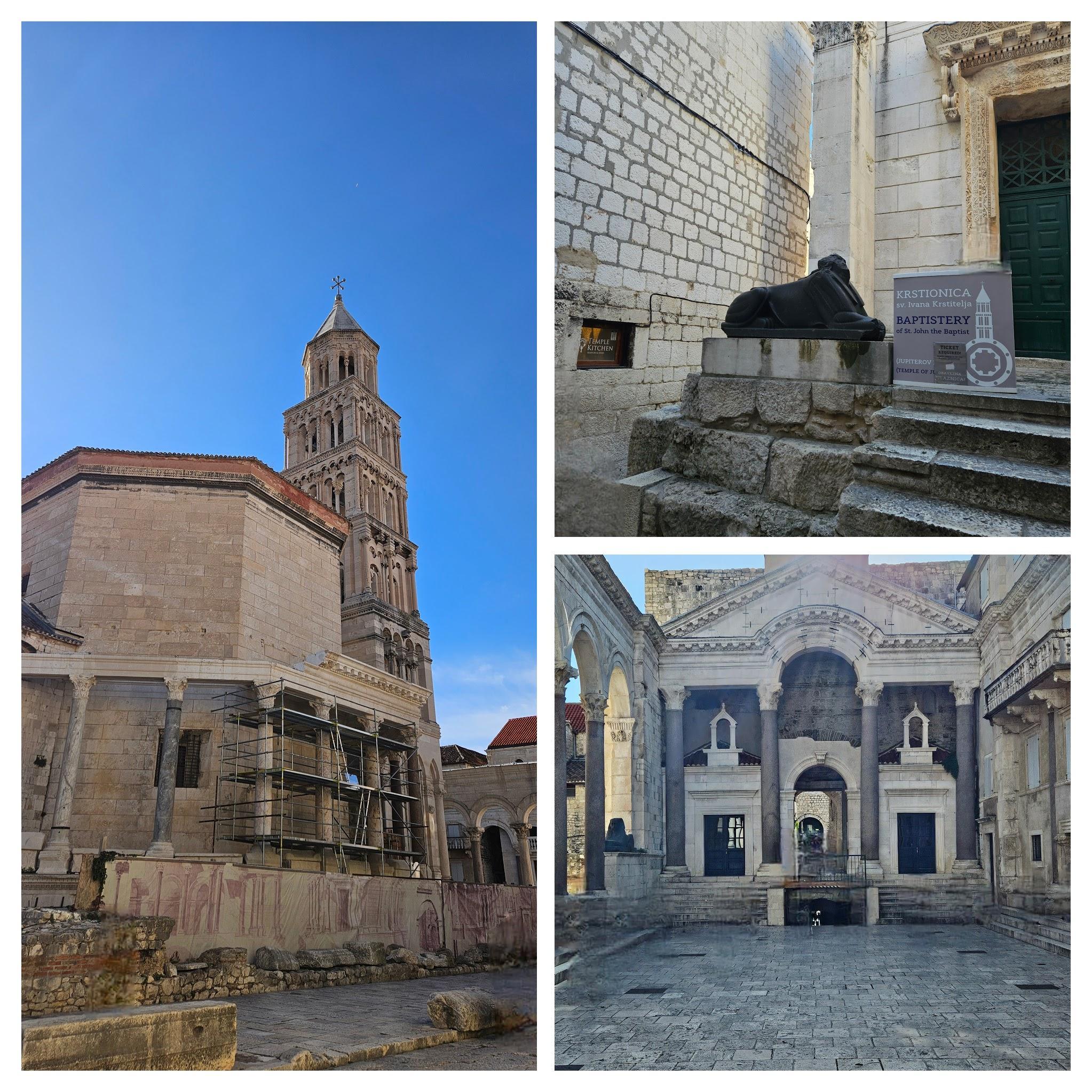
The next day, our guide led a walking tour, sharing stories of how the fortress grew from imperial residence to the vibrant city it is today. She explained the significance of the four gates—Golden, Silver, Iron, and Brass—pointed out the cathedral’s transformations, and revealed the Egyptian gift still preserved within the framework.
The cathedral and Egyptian gift ©Darla Hoffmann
I climbed the 124 steps of the cathedral bell tower, and the town spread below me like a map of Roman lineage. Wandering the crevices of this architectural dynasty, touching rock carvings, and peering at intricate details, I felt a rare connection to the emperor and the world he left behind. This was more than sightseeing; it was a complete sensory immersion in the generations of life.
Trattoria Tinel ©Darla Hoffmann
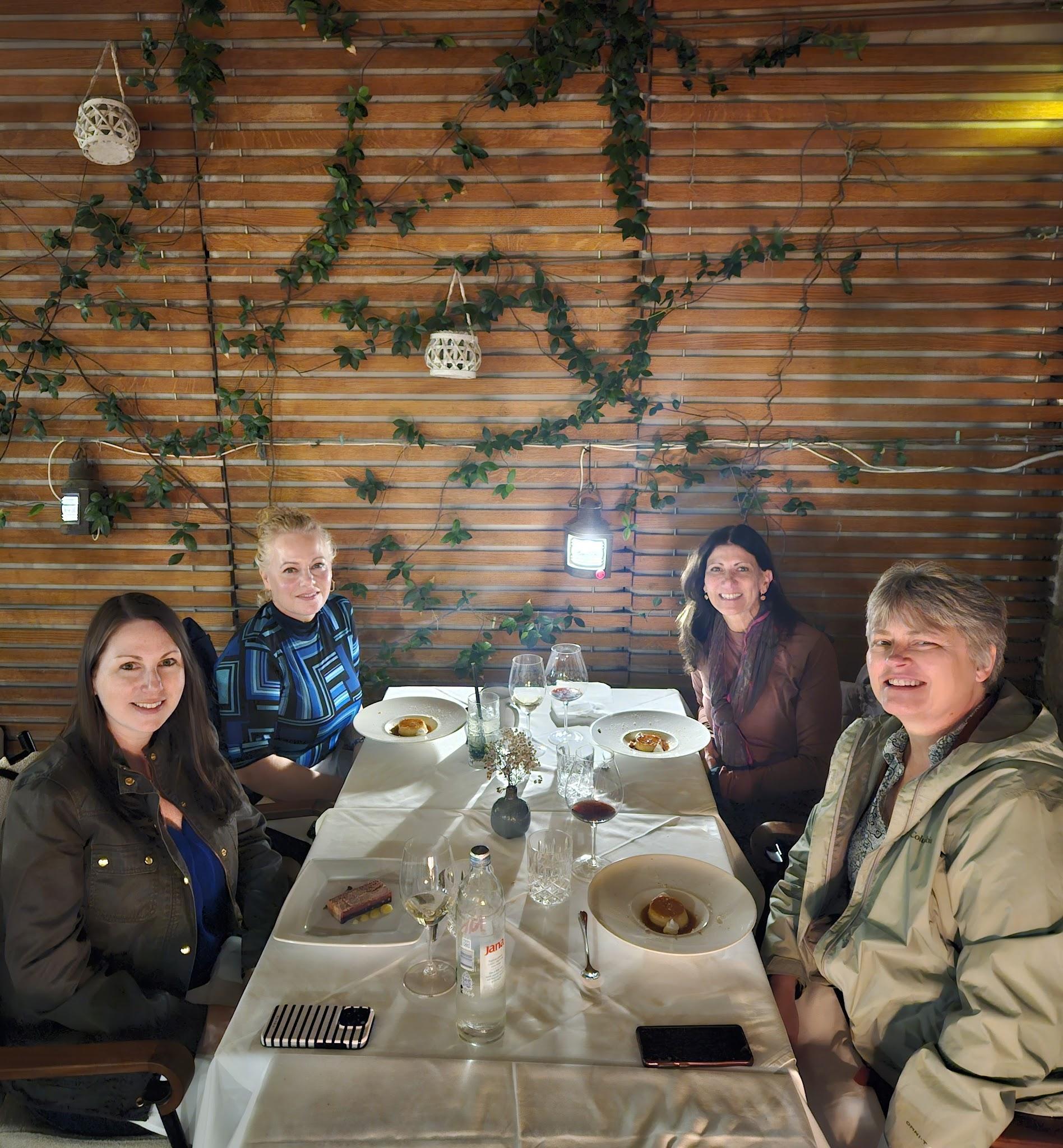
Our final meal—gregada and carob cake—at Trattoria Tinel, tucked on a slanted pathway just steps from the palace, was a tender farewell. With every bite and every glance at our immense surroundings, I felt a deep appreciation for the energy that has been breathed into Diocletian’s Palace over the years.
If you go to Split, wander freely. Scramble through its alleys, explore its substructures, taste its food, and let every stone tell its story. Diocletian’s Palace is not just a monument; its existence is a true witness of the passage of time.
 About Wine & Travel